Independence
Most families want the same things for an aging parent or grandparents: for them to be safe, independent, socially connected and able to continue enjoying the life they have built. But aging can gradually introduce challenges.
Driving may become difficult. Preparing meals might require more effort. Mobility can change. Friends may move away or pass on. An older adult who once had a busy social calendar may begin spending considerably more time alone.
Families often wonder:
How can we help without taking away their independence?
The answer usually isn’t doing everything for an older adult. Instead, it is identifying the barriers that are making independence more difficult and providing the right amount of support to help overcome them.
Why Does Social Connection Matter as We Age?
Social connection is part of healthy aging.
Statistics Canada reported in 2026 that 9.2% of Canadians age 65 and older always or often felt lonely, with another 34.3% reporting that they sometimes felt lonely. At the same time, more than three-quarters of seniors—77.6%—reported that they always or often had someone they could count on when needed.
These numbers illustrate something important: maintaining relationships and dependable support networks matters. Family, friends, neighbours, community groups, caregivers and intergenerational relationships can all form parts of that network.
What Can Make It Harder for Aging Grandparents to Stay Connected?
Social isolation doesn’t always begin because someone chooses to withdraw. Sometimes practical barriers gradually make participation more difficult.
Transportation – A grandparent who stops driving may suddenly lose much more than transportation. Driving may have provided access to friends, shopping, church, appointments, volunteering, grandchildren and community activities. The National Research Council of Canada noted in 2025 that access to transportation helps older adults maintain active lifestyles and social connections. Lack of affordable, convenient and reliable transportation can make it more difficult to participate in recreational and social activities.
Changes in Mobility – Stairs, long walks, icy sidewalks and even getting into a vehicle can turn previously simple outings into challenges. Instead of assuming Grandma doesn’t want to attend anymore, ask whether something is making attendance difficult.
Loss of Friends or a Spouse – Social circles naturally change over a lifetime. The loss of a spouse, sibling or close friend can leave an enormous gap in an older adult’s everyday life. Family relationships can become particularly important during these transitions, while opportunities to develop new friendships and community connections should also be encouraged.
Changes in Health – Fatigue, hearing or vision changes, chronic conditions and cognitive changes may make some social situations more demanding. The solution doesn’t always have to be withdrawing from activities. Sometimes activities simply need to be adapted.
How Can Families Help Without Taking Away Independence?
This is one of the most important questions families can ask.
Helping too little may leave an older adult struggling unnecessarily. Helping too much can make someone feel that decisions are being made for them.
Start with conversation. Instead of: “You shouldn’t be doing that anymore.” Try: “Is there anything about doing this that’s becoming difficult?“
Rather than automatically taking over grocery shopping, ask whether transportation, carrying bags or navigating the store is the actual problem. Perhaps Grandpa still enjoys choosing his own groceries but would appreciate someone driving and helping carry them inside.
That distinction matters. Person-centred support starts with what the older adult wants to continue doing, and then determines what assistance would make that possible.
How Can Technology Help Grandparents Stay Connected?
Technology can help bridge distance, but it needs to be accessible. A smartphone or tablet can help seniors:
- video call grandchildren and friends
- participate in family group chats
- access community information
- listen to music
- attend some virtual activities
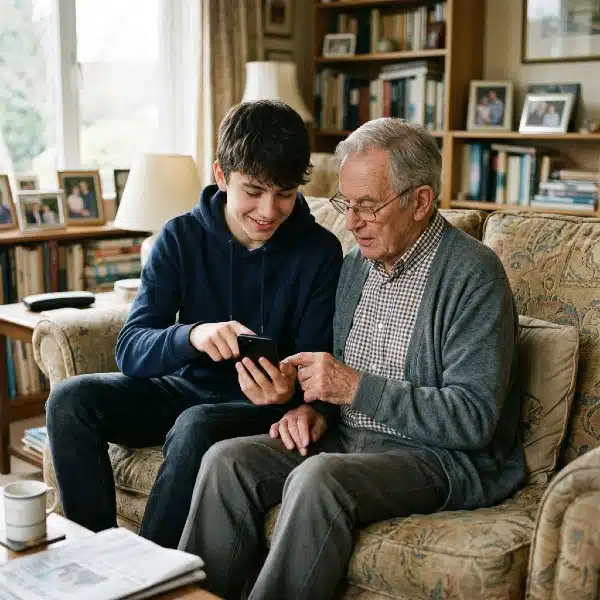
Don’t assume a grandparent isn’t interested because technology is unfamiliar. Teach one useful feature at a time and write down simple instructions if necessary. Interestingly, Canada’s New Horizons for Seniors Program specifically identifies seniors’ digital literacy as one way of addressing social isolation. Technology shouldn’t replace human connection—but it can make maintaining that connection easier.
How Can Families Include a Grandparent Living With Dementia?
A diagnosis of dementia does not mean that meaningful family relationships should stop.
Someone living with dementia may still enjoy music, familiar photographs, simple activities, favourite foods and the company of grandchildren. The way family members interact may need to change as dementia progresses.
Keep visits comfortable rather than overly busy. Follow the person’s lead. Avoid repeatedly correcting forgotten details. Choose familiar activities and recognize that emotional connection can remain meaningful even when specific memories become difficult to retrieve.
Children may also need age-appropriate explanations about why Grandma or Grandpa is behaving differently. The goal is not to force the relationship to remain exactly as it was. It is to find ways for connection to continue as circumstances change.
What Are the Signs an Aging Grandparent May Need More Support at Home?
Changes are often gradual, so families may not immediately recognize that additional assistance could help.
Watch for changes such as:
- difficulty managing everyday household activities
- missed meals or declining nutrition
- increasing difficulty with personal care
- mobility or fall concerns
- forgetting appointments or routines
- withdrawal from previously enjoyed activities
- increasing isolation
- family caregivers becoming overwhelmed.
One sign by itself doesn’t necessarily mean someone requires in-home support care. A pattern of changes, however, can be a good reason to start a conversation. A family might notice that Mom is managing well overall but needs assistance with certain routines. Dad may be physically independent but benefit from companionship and support. A person living with dementia may require increasingly specialized assistance to remain safely at home.
Sometimes support begins after a hospitalization or significant change in health. Other times the need develops gradually. This is why home care should not be viewed simply as “taking over.” Done well, it can be about supporting independence.

September Grandparents Month
In celebration of Grandparents month, we have written some interesting, educational and supportive information. Here is a review:
- The Benefits of Intergenerational Relationships for Seniors and how one generation has experience and memories to share and another brings different experiences, questions and perspectives. When they meet in the middle, both can benefit.
- What Grandchildren can learn from their Grandparents and why some lessons are practical and others are less tangible. Grandma knows how to make the family’s favourite pie without looking at a recipe. Grandpa might know how to play chess or identify birds in the backyard.
- Meaningful Activities to Enjoy together is truly about creating memories. Spending meaningful time with grandchildren doesn’t require an elaborate outing, expensive activity or packed schedule. Often, the best memories begin with something remarkably ordinary: baking cookies, planting flowers, looking through photographs or sitting together and talking.
Promyse Home Care: Helping Seniors Age at Home in Waterloo Region
Promyse Home Care provides personalized in-home care for seniors and families throughout Kitchener, Waterloo and Cambridge. Our person-centred approach begins with understanding the individual: their needs, preferences, abilities, routines and goals.
If you’ve noticed changes in an aging parent or grandparent and aren’t sure whether additional help at home may be appropriate, have a conversation with the team at Promyse Home Care to discuss your family’s situation and learn more about the in-home care options available in Kitchener, Waterloo and Cambridge.
A family might notice that Mom is managing well overall but needs assistance with certain routines. Dad may be physically independent but benefit from companionship and support. A person living with dementia may require increasingly specialized assistance to remain safely at home.