It’s About Connection
Meaningful relationships can make a difference at every stage of life. For older adults, connections with children, teenagers and younger adults can provide companionship, a renewed sense of purpose and opportunities to remain engaged with the world around them. These connections are often described as intergenerational relationships – relationships that bring people from different generations together to share experiences, knowledge, interests and everyday life.
While grandparents and grandchildren are a familiar example, intergenerational relationships do not have to involve family members. They can develop between neighbours, family friends, volunteers, students, caregivers and members of community organizations.
The important ingredient isn’t age ~ It’s a connection. When people from different generations spend meaningful time together, both have something valuable to contribute—and something new to discover.
What Is an Intergenerational Relationship?
An intergenerational relationship is a social connection between people from different generations or age groups. It can be informal, such as an older neighbour talking with children on the street, or more structured through schools, volunteer programs, community organizations or senior programs.
Activities might be as simple as having a conversation, preparing a favourite recipe together, playing a game or looking through family photographs. They can also involve an exchange of skills. A teenager might help an older adult learn how to make a video call, while the senior teaches the teenager how to bake a family recipe.
These seemingly small interactions can create something much larger: an opportunity for people to learn from one another and build meaningful relationships that extend beyond age boundaries.
How Can Intergenerational Relationships Improve Seniors' Mental and Emotional Well-Being?
Social connection is an important part of healthy aging. For seniors who live alone, have lost a spouse or close friends, experience mobility challenges, or simply have fewer opportunities to socialize than they once did, regular interaction with younger generations can be particularly meaningful.
Reduce Loneliness and Social Isolation
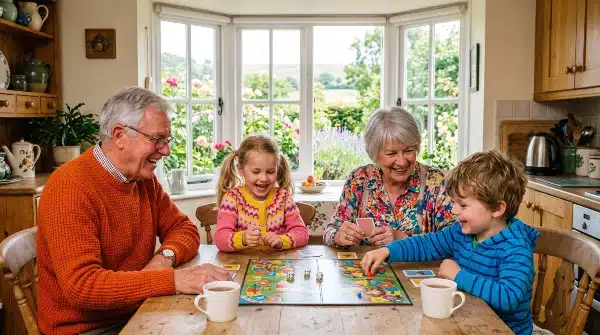
Intergenerational relationships can create additional opportunities for conversation, laughter and companionship. Regular visits from grandchildren, helping a neighbourhood child with homework, participating in a community program or simply sharing coffee with a younger friend can give a senior something to anticipate and enjoy.
Importantly, social connection doesn’t always require a major outing or organized event. Sometimes an hour spent talking at the kitchen table can be just as meaningful.
Creating a Renewed Sense of Purpose
One of the most valuable aspects of an intergenerational relationship is that the older adult isn’t simply the person receiving help.
They have something to give.
Seniors have decades of knowledge, experience and stories that can benefit younger generations. Being asked for an opinion, teaching someone a skill like gardening or repairing something or sharing personal experiences reinforces the fact that their knowledge continues to have value.
Having someone interested in what you know and what you have experienced, can provide a powerful sense of purpose and belonging.
Social Connection Matters for Healthy Aging
The importance of staying socially connected becomes increasingly clear as Canada’s population ages. According to the Government of Canada, loneliness and social isolation can affect the health and well-being of older adults. Statistics Canada reported in 2026 that 9.2% of Canadians aged 65 and older said they always felt lonely, while another 34.3% reported sometimes feeling lonely. At the same time, 67.2% of seniors reported a strong sense of belonging to their community – higher than any other age group.
Creating opportunities for meaningful social interaction, including relationships between generations, can therefore be an important part of helping seniors remain connected, involved and valued in their communities.
Can Spending Time With Younger People Provide Cognitive Stimulation for Seniors?
Conversation involves memory, language and attention. Teaching someone a familiar skill requires explanation and problem-solving. Learning something new requires concentration and curiosity. Even learning how to use a new phone app from a teenager can turn into an engaging mental exercise.
The goal doesn’t have to be formal “brain training.” Everyday activities that encourage conversation, learning, creativity, recollection and problem-solving can provide enjoyable opportunities for mental engagement.
Finding the Parallels Between Generations
It is easy to focus on the differences between generations. Different music, technology, expressions and life experiences can sometimes make generations appear worlds apart.
Spend enough time talking, however, and the similarities often become much more apparent.
An older adult may discover that a teenager is dealing with the same uncertainty about friendships that they remember experiencing decades earlier. A young adult starting a career may recognize similarities with a senior’s stories about their first job.
Love, friendship, family, ambition, disappointment, humour, belonging and the desire to be understood aren’t limited to a particular generation.
Discovering these generational parallels can help challenge stereotypes on both sides.
Instead of seeing “a senior” and “a teenager,” people begin seeing each other as individuals.
What Activities Can Seniors and Younger Generations Enjoy Together?
The best intergenerational activities are often those that allow everyone to participate rather than placing one person entirely in the role of teacher or student.
Some ideas include:
- Storytelling: Ask an older adult about childhood, school, work, travel, traditions or important historical events they experienced.
- Learning technology: Younger people can help seniors explore smartphones, tablets, video calling, digital photographs or other technology.
- Teaching traditional skills: Seniors can share cooking, baking, gardening, sewing, woodworking, crafts or other skills.
- Cooking together: Prepare a family recipe while discussing where it originated and why it is meaningful.
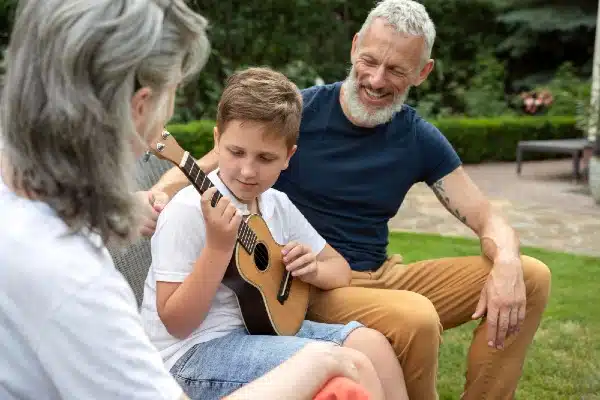
- Music: Compare favourite songs from different generations or introduce one another to new artists.
- Games and puzzles : Cards, board games and puzzles offer opportunities for conversation and friendly competition.
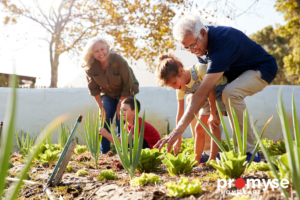
- Gardening: Planting flowers, vegetables or herbs provides a project that can be enjoyed over time.
- Learning something new together: Neither person has to be the expert. Try a new craft, recipe, game or hobby together.
The activity itself is often secondary. The real benefit comes from the conversation and connection that develop around it.
Intergenerational Relationships Offer Mutual Benefits
Seniors can help younger generations develop a stronger understanding of who they are and where they came from. Stories about family history, traditions, previous generations and changing communities can provide a connection with the past that cannot always be found in a textbook or online search.
One of the most important benefits of intergenerational relationships is that seniors aren’t simply recipients of support—they can be teachers, mentors and valued sources of knowledge.
Canadian research supports this two-way approach. In the Government of Canada’s 2026 evaluation of the New Horizons for Seniors Program, 61% of surveyed seniors reported participating in mentoring activities. Of those participants, 44% acted as mentors, sharing their own knowledge and experience with others.
Whether teaching a traditional recipe, sharing family or community history, helping a young person learn a practical skill or simply offering the perspective that comes from decades of experience, older adults have much to contribute to younger generations.
Sharing Stories Can Preserve Family and Community History
There is another benefit that can easily be overlooked: intergenerational relationships help preserve stories.
Every older adult carries personal history. Their memories can tell younger generations what life was like before they were born – what their neighbourhood looked like, how their family celebrated holidays, what their first job was, how they met their spouse or how they experienced important moments in history.
Encouraging seniors to share these memories can help younger family members understand their roots while giving the older adult an opportunity to reflect on experiences that have shaped their life.
Consider recording some of these conversations; with permission, or creating a family memory book together. What begins as an afternoon activity may eventually become something treasured by future generations.
How Can Families Encourage More Intergenerational Connection?
Creating these relationships doesn’t need to be complicated. Start by looking for opportunities that already exist in everyday life. Encourage children to ask grandparents questions rather than simply visiting them. Invite an older relative to teach a favourite skill. Ask a teenager to help a senior organize digital photographs. Cook a meal together. Start a small garden. Make regular phone or video calls when distance prevents in-person visits.
Most importantly, allow the relationship to develop naturally. A meaningful intergenerational connection isn’t about keeping a senior “occupied.” It is about creating opportunities for participation, contribution and genuine friendship.
Helping Seniors Stay Connected While Aging at Home
For many older adults, remaining at home means staying close to the people, routines, memories and community connections that are important to them. As circumstances change, however, maintaining those connections can sometimes become more difficult. Mobility challenges, health concerns or changing family schedules may reduce opportunities for seniors to participate in activities they once enjoyed.
At Promyse Home Care, we believe supporting an older adult at home involves more than assisting with day-to-day needs. Person-centred home care recognizes the importance of the whole person – their preferences, routines, relationships, independence and connection to their community.
Whether that means helping a senior continue favourite activities, maintain important routines or remain connected with the people who bring meaning to their life, the goal is to help older adults continue participating in life in ways that matter to them.
For families in Kitchener, Waterloo and Cambridge, thoughtful in-home support can help create the stability and assistance an older adult needs to continue enjoying the relationships that make home feel like home.
Connection Has No Age Limit
Perhaps the greatest benefit of intergenerational relationships is their simplicity.
One generation has experience and memories to share. Another brings different experiences, questions and perspectives. When they meet in the middle, both can benefit.
A conversation becomes a history lesson. A technology lesson becomes an afternoon of laughter. A recipe becomes a family tradition passed along. A senior becomes a mentor, and a young person becomes a friend.
Age may separate generations, but meaningful relationships can bring them together.
Looking for more guidance? Visit the Senior Care Resource Centre for Waterloo Region for trusted information on dementia, home care, caregiving, safety, and healthy aging.