Creating Memories
Continuing with the September theme of celebrating Grandparents, let’s talk about activities for family members. Spending meaningful time with grandchildren doesn’t require an elaborate outing, expensive activity or packed schedule. Often, the best memories begin with something remarkably ordinary: baking cookies, planting flowers, looking through photographs or sitting together and talking.
Intergenerational activities give grandparents and grandchildren opportunities to learn about one another, share skills and strengthen their relationship. They can also help older adults remain socially connected and actively involved in family life.
The Government of Canada recognizes social participation, mentoring and intergenerational engagement as important components of seniors’ inclusion and healthy aging.
So, what can grandparents and grandchildren actually do together? Here are 10 ideas that can be adapted for different ages, interests and abilities.
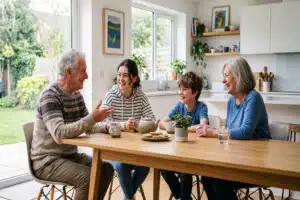
1. Share Family Stories
Children often know surprisingly little about what their grandparents’ lives were like before they became grandparents. Turn that into an activity. Instead of asking, “Tell me about your childhood,” try specific questions:
- What games did you play?
- What was your first day of school like?
- What was your first job?
- How did you meet Grandma or Grandpa?
- What did you buy with your first paycheque?
Specific questions tend to trigger specific memories. Grandchildren can write down the answers or – with permission – record the conversation. Over time, these recordings could become a wonderful family history collection.
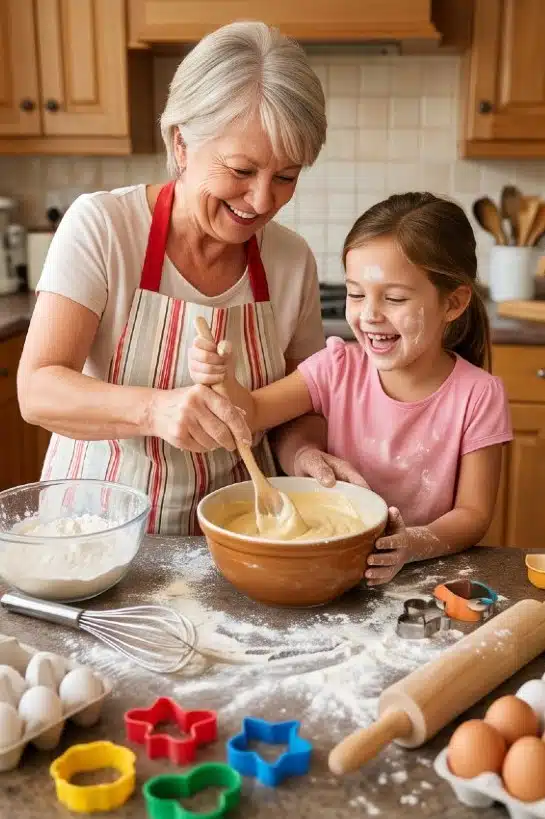
2. Cook a Favourite Family Recipe
Food can connect generations remarkably well. Choose a recipe that has a story behind it and make it together. Perhaps it’s Grandma’s Christmas shortbread, Grandpa’s famous pancakes or a dish that originated with an earlier generation of the family.
While you’re cooking, talk about where the recipe came from and when it was traditionally served. For younger children, measuring and mixing provide ways to participate. Older grandchildren could photograph the process and create a family recipe book.
Suddenly you’re not simply making dinner. You’re passing along a tradition.
3. Teach Each Other Something New
Intergenerational relationships work particularly well when everyone has something to contribute.
Grandparents might teach gardening, knitting or sewing, baking, woodworking, card games, fishing, painting and practical skills.
Grandchildren might teach technology such as video calling, smartphone photography and texting, streaming music, online games or using a tablet.
The wonderful part is watching the teacher become the student—and then switching places.
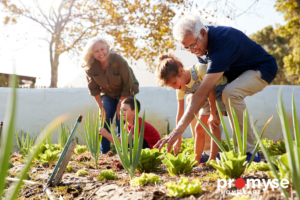
4. Start a Garden Together
Gardening is an activity that can span months rather than an afternoon. Plant flowers, herbs or vegetables together and give grandchildren responsibility for helping to care for them.
If bending or kneeling is difficult for a grandparent, raised planters or pots on a table may make gardening more accessible. Children learn patience and responsibility while grandparents can share knowledge they may have developed over many years. And eventually there may be tomatoes to eat together.
5. Explore Music From Different Generations
Ask grandparents to choose five songs they loved when they were young. Then let the grandchildren choose five of their favourites. Listen together. The conversation that follows may be more interesting than the music itself.
Who did Grandma see in concert? What song played at the grandparents’ wedding? What music did Grandpa’s parents dislike?
Then reverse the roles and let grandchildren explain why today’s music matters to them. Music provides an easy bridge between generations because both sides arrive with something to share.
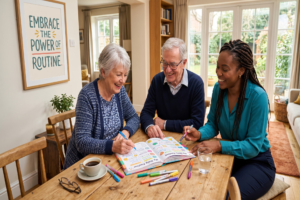
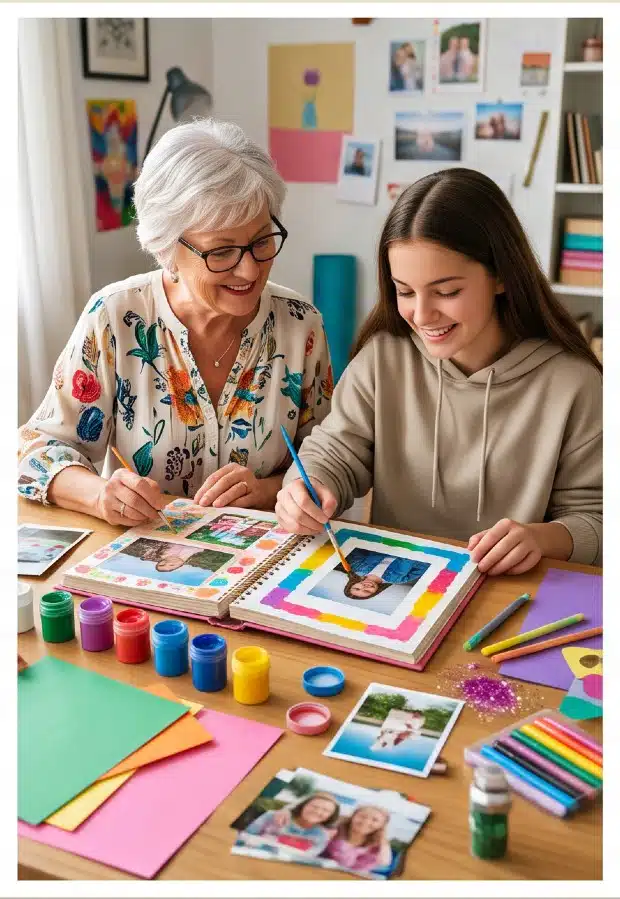
6. Create a Family Memory Book
Bring together photographs, handwritten notes, recipes, postcards and family stories to create a scrapbook or digital memory book. Grandparents can identify people and places in older photographs while grandchildren write captions or organize the pages.
Ask questions while you work.
- “Who is that?”
- “Where was this taken?”
- “What do you remember about that day?”
The finished project becomes something the whole family can enjoy.
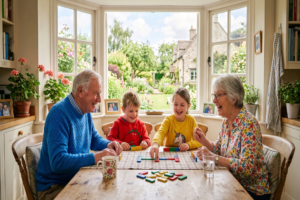
7. Play Games, Cards or Do a Puzzle
Games create conversation without requiring conversation to be the activity. Cards, checkers, chess, dominoes, board games and jigsaw puzzles can work particularly well.
Grandparents may introduce games they’ve played for decades, while grandchildren can bring newer games to the table. Choose activities suited to everyone’s abilities and avoid making winning the most important part.
The objective is time together.
8. Volunteer Together
Connection can extend beyond the family. Grandparents and older grandchildren could volunteer together for an appropriate community project, charity, neighbourhood initiative or event. This allows younger people to see their grandparents contributing to the community rather than viewing them only through the lens of aging.
The Government of Canada’s New Horizons for Seniors Program specifically promotes volunteerism among seniors and other generations, recognizing the role seniors can continue to play in their communities.
9. Take a Trip Down Memory Lane
You don’t necessarily have to travel far. Drive or walk past a grandparent’s former home, school, workplace or favourite neighbourhood location. If mobility makes outings difficult, use old photographs or online maps instead.
Ask grandparents questions like:
- “What used to be here?”
- “Where did you go with your friends?”
- “How has this neighbourhood changed?”
For families in Kitchener, Waterloo and Cambridge, this can also become a fascinating lesson in local history. We discuss creating family history in our previous article – What can Grandchildren Learn from their Grandparents.
10. Create Your Own Grandparent-Grandchild Tradition
Perhaps the best activity is one that becomes “your thing.”
- Sunday afternoon tea.
- Tuesday telephone calls.
- A monthly movie night.
- Planting tomatoes every spring.
- Making Christmas cookies.
- Watching the first hockey game of the season.
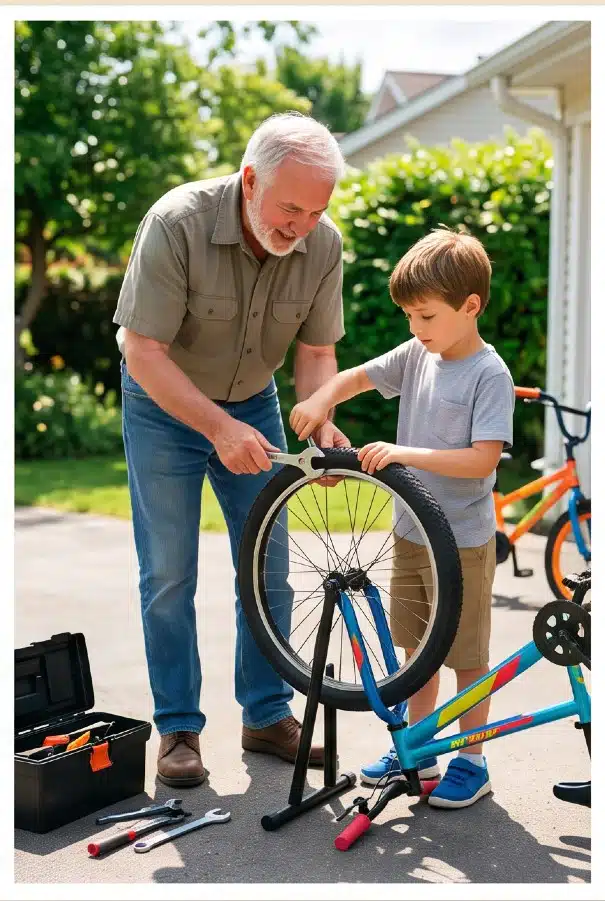
- Fixing things together
Traditions don’t need to be elaborate to become meaningful. Consistency is often what turns an ordinary activity into a cherished memory.
What If a Grandparent Has Limited Mobility?
Activities can almost always be adapted. A grandparent doesn’t need to leave home to tell stories, cook at the kitchen table, listen to music, play cards, help with homework or teach a skill. If standing is difficult, bring the activity to a comfortable chair or table. If an outing would be tiring, make it shorter. If hearing is a concern, reduce background noise.
The goal isn’t completing the activity perfectly.
It’s creating an opportunity to participate.
Helping Seniors Continue the Activities They Enjoy
Sometimes an older adult wants to continue participating but needs a little extra assistance to make it possible.
Promyse Home Care supports seniors throughout Kitchener, Waterloo and Cambridge with personalized in-home care designed around the individual—not simply a list of tasks.
For one person, support may mean assistance with everyday routines. For another, it may help them remain engaged with favourite activities, family traditions and the people who matter most. Because growing older shouldn’t mean giving up the meaningful moments that make life enjoyable.
This Grandparents Month, perhaps the best question isn’t “What should we buy Grandma or Grandpa?” Try asking: “What can we do together?”