
Summer Heat
When summer temperatures climb in Kitchener, Waterloo and Cambridge, many families begin to worry about an elderly parent or loved one who is living independently at home.
- Is Mom drinking enough water?
- Is Dad’s apartment getting too hot?
- What happens if the air conditioning stops working? And how often should someone be checking in?
These are important questions because older adults can be particularly vulnerable to heat-related illness.
In 2026, Health Canada issued new guidance recommending that indoor temperatures be maintained at no higher than 26°C to help protect older adults from heat-related illness. The guidance also cautions that prolonged exposure to temperatures between 26°C and 31°C, particularly overnight, should be avoided whenever possible.
For families, this means summer safety involves more than checking the outdoor forecast. Paying attention to what’s happening inside an elderly parent’s home can be just as important.
Why Is Extreme Heat More Dangerous for Older Adults?
As we age, our bodies may become less efficient at responding to temperature changes. Some older adults may also have health conditions, mobility limitations or other circumstances that make it more difficult to stay cool.
An elderly person living alone may not recognize that their home has become dangerously warm. They may also have difficulty adjusting the thermostat, closing blinds, getting themselves a cold drink or travelling somewhere cooler.
This is why a heat wave that is uncomfortable for one person can become a serious health concern for another.
Waterloo Region Public Health identifies older adults among those at greater risk for heat-related illness and recommends checking on people who are more vulnerable several times a day during periods of extreme heat.
How Hot Is Too Hot Inside a Senior's Home?
A thermometer inside the home can provide important information that the outdoor temperature cannot.
Health Canada’s 2026 guidance recommends an upper indoor temperature limit of 26°C for older adults. This is a health-protection threshold rather than simply a measure of comfort.
Health Canada also advises that sustained exposure to indoor temperatures between 26°C and 31°C should be avoided whenever possible, particularly overnight and over consecutive days. Temperatures above 31°C represent a critical threshold where health risks increase significantly.
This can be especially important in apartments, condominiums and older homes without central air conditioning.
During hot weather, check the temperature in the rooms your loved one actually uses — particularly the bedroom. A home that remains hot throughout the night may provide little opportunity for the body to recover from daytime heat.
What Are the Warning Signs of Heat Exhaustion in Seniors?
Families and caregivers should become familiar with what is normal for an older person so that changes are easier to recognize.
Early signs of heat exhaustion can include:
- headache
- nausea
- dizziness
- unusual tiredness or weakness
- excessive thirst
- dark urine
- changes in normal behaviour
Heat stroke is much more serious and is a medical emergency. Signs can include hot or red skin, dizziness, nausea, confusion or a significant change in the person’s normal mental state.
If you suspect heat stroke, call 911 immediately and move the individual to a cooler place while waiting for emergency assistance.
With an elderly parent, don’t automatically assume that confusion, fatigue or weakness is simply part of aging. A noticeable change during extremely hot weather deserves attention.

How Can I Help My Elderly Parents Stay Hydrated?
One of the simplest ways to help an older adult during hot weather is to make drinking fluids easy and convenient. Rather than simply reminding Mom or Dad to “drink more water,” try building hydration into their normal daily routine.
Keep a glass or reusable bottle of water within easy reach of their favourite chair. Offer a drink with meals and snacks and periodically throughout the day. Foods with a high water content can also help supplement fluids.
Waterloo Region Public Health recommends drinking water frequently and before you feel thirsty during extreme heat. If you are concerned about how much fluid is appropriate for someone because of a health condition or medication, speak with their healthcare provider for individualized advice.
What If My Parent Has Dementia and Doesn't Realize They're Overheating?
Hot weather can create additional challenges for someone living with Dementia and Alzheimer’s disease.
A person experiencing cognitive changes may not recognize that they are becoming overheated or thirsty. They may forget to drink, dress inappropriately for the temperature or be unable to explain that they are uncomfortable.
They may also turn off an air conditioner or fan without remembering why it was being used. This makes regular observation particularly important.
Family members and caregivers can help by checking the temperature inside the home, making drinks easily accessible, encouraging fluids throughout the day, helping the person dress appropriately and watching for changes in behaviour or alertness.
A familiar routine and familiar caregiver can also help reduce confusion while ensuring important daily needs aren’t overlooked.
Should an Elderly Parent Living Alone Be Checked on During a Heat Wave?
Yes. Older adults at greater risk should be checked on regularly during extreme heat. Waterloo Region Public Health recommends checking on people at increased risk several times a day, either by calling or visiting. For an older adult living alone, an in-person visit can provide information that a quick telephone conversation may not.
When visiting, ask yourself:
- Is the home comfortably cool?
- Is there working air conditioning or another safe way to cool the living space?
- Does Mom or Dad have water nearby?
- Have they been drinking and eating normally?
- Are they dressed appropriately for the temperature?
- Do they seem unusually tired, confused or unwell?
If the home cannot be kept cool, consider helping your loved one spend part of the day somewhere air-conditioned.
Waterloo Region maintains Warming, Cooling and Clean Air Spaces throughout Kitchener, Waterloo, Cambridge and surrounding communities. These public spaces provide temporary relief from extreme temperatures during their regular operating hours.
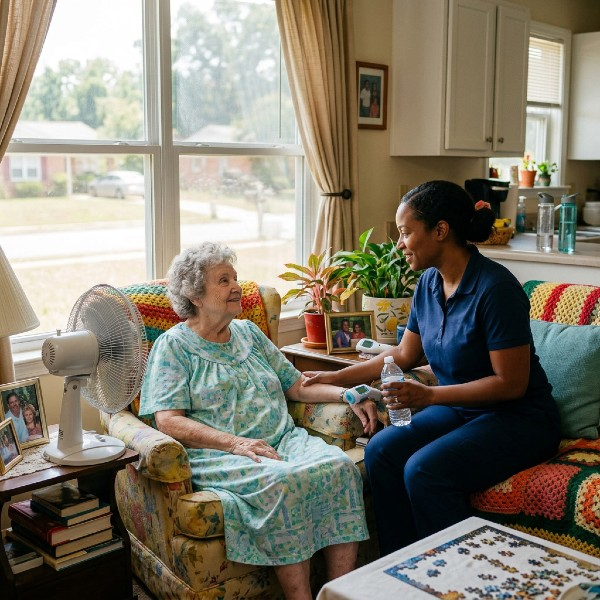
How Can Home Care Help Seniors During Hot Weather?
Not every family can check on an elderly parent several times throughout the day.
Work, family responsibilities, vacations and distance can make frequent visits difficult. This is one situation where professional in-home care can provide both practical assistance and additional peace of mind.
Depending on the individual’s care plan, a home caregiver may be able to assist with:
- regular wellness checks
- hydration reminders
- preparing meals and drinks
- personal care and dressing
- monitoring the comfort of the home
- companionship
- assistance with daily activities
- transportation or accompaniment when appropriate
- recognizing changes and communicating concerns to family members
Most importantly, care can be tailored around the person rather than expecting the person to adapt to a predetermined routine.
At Promyse Home Care, our person-centred approach focuses on understanding each client’s individual needs, preferences, routines and circumstances. That can be particularly valuable during periods of extreme weather when a person’s normal routine may need additional support.
Does My Parent Need Home Care or Just a Little Extra Help This Summer?
Needing assistance doesn’t necessarily mean an older adult needs around-the-clock care. Sometimes a family simply needs an extra set of eyes. Perhaps your mother is managing independently but you’re concerned about her being alone during a week of extremely hot weather.
Maybe your father has early-stage dementia and needs reminders to eat and drink. Or perhaps you’re going away for a summer vacation and want someone checking on your parents while you’re gone.
Scheduled home care visits can provide additional support without unnecessarily taking away a person’s independence. It can also give family members an opportunity to see how their loved one is managing. If additional needs become apparent, the care plan can then be reassessed.

Helping Seniors Stay Safe and Independent at Home in Kitchener-Waterloo
For many older adults, remaining in their own home provides familiarity, comfort and a sense of independence. The right provider can make a meaningful difference in their quality of life.
The goal shouldn’t necessarily be to take that independence away. Instead, families can look for practical ways to make living at home safer and more manageable, including during periods of extreme summer heat.
Monitor indoor temperatures. Encourage regular hydration. Know the signs of heat-related illness. Develop a plan for getting to a cooler environment if necessary. And, perhaps most importantly, make sure someone is checking in.
Promyse Home Care provides personalized in-home care for seniors and families throughout Kitchener, Waterloo and Cambridge. From companionship and assistance with daily living to specialized care and more comprehensive in-home support, our goal is to help clients remain safe, comfortable and connected while living in the home they know and love.
If you’re concerned about how an elderly parent is managing at home this summer, a conversation about their needs can be a good place to start.